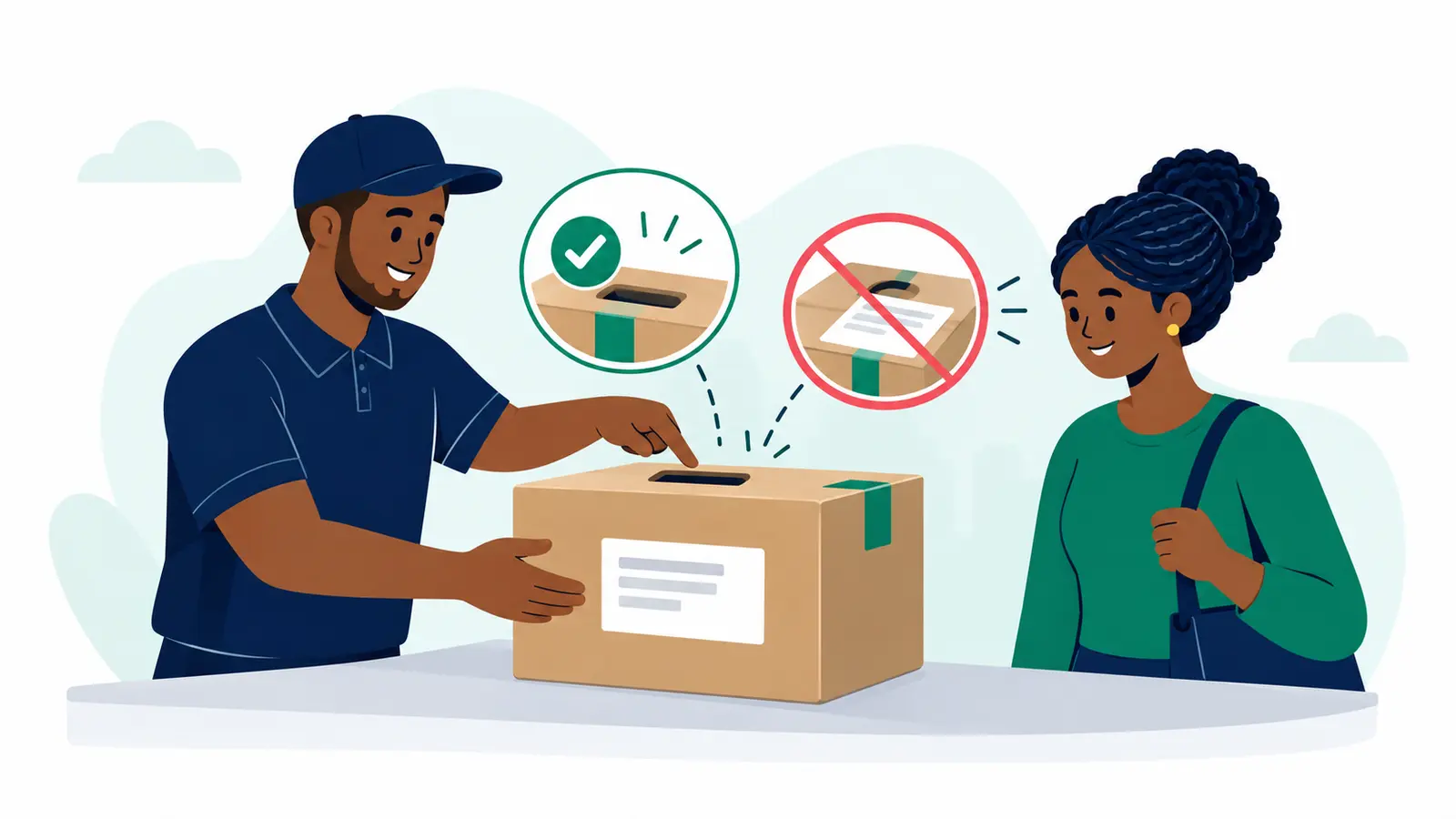
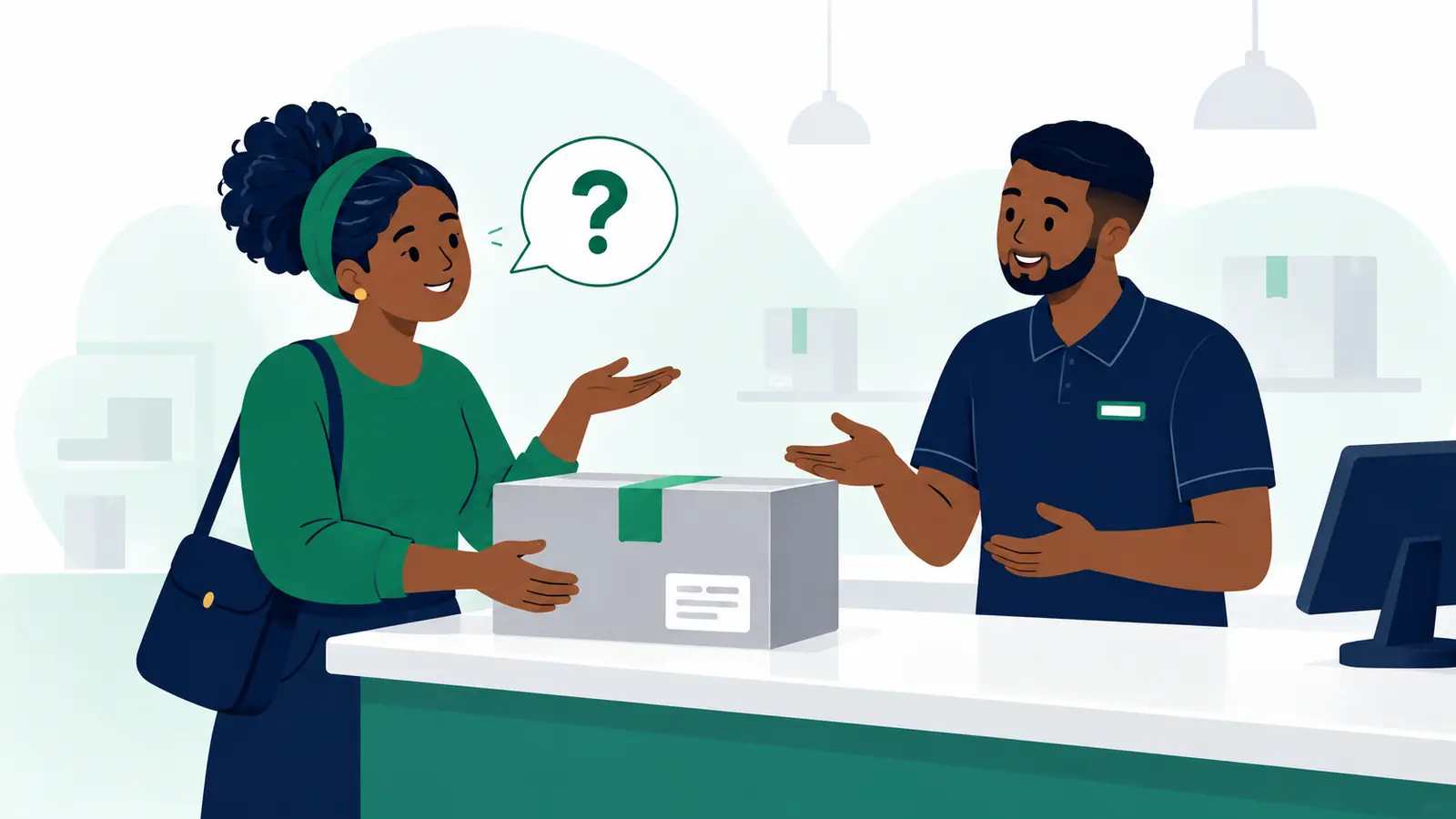
Share accurate information that makes the agreed delivery workable: the recipient’s name, a reachable contact number, and the destination details needed for the chosen handover. Treat that as a starting point to discuss with the seller, rather than a fixed form every order must follow. Before sending more, ask what the information is needed for and whether the seller will pass it to a delivery provider.
The useful boundary is the parcel’s journey. Give enough detail for the people arranging and completing that journey to do their jobs, and question requests that do not have a clear connection to it. You can be cooperative and still ask, “Who needs this, and what will they use it for?”
Agree on the handover before sharing the full destination
Start with how you want to receive the parcel. Are you asking for delivery to your home, your workplace, or a collection location offered for that order? That decision helps you work out which personal details are relevant.
If you are still discussing delivery options, consider giving the destination area first and asking what further detail is needed to work out the plan. Once you agree on the handover, provide the precise information required to complete it. If the seller needs greater precision earlier to establish an option or price, ask them to explain that connection.
For a home delivery, your agreed instructions might include a building name and a useful landmark. For a workplace handover, they might identify the reception or entrance where you can receive the parcel. These are examples of practical instructions, not a universal Kenyan address format.
Choose a destination where you can realistically receive the order. An address that reveals less but leaves the delivery person unable to reach you does not serve your purpose. Equally, if you have agreed to collect elsewhere, ask why your full home address would be needed.
Make each detail earn its place
A useful way to review a seller’s request is to connect each item to a delivery task.
The recipient’s name should identify the person receiving the order. A contact number should reach someone able to coordinate the handover. Destination information should explain where the parcel needs to go. Additional instructions should resolve a specific issue, such as which entrance you have agreed to use.
Kenya’s Office of the Data Protection Commissioner lists purpose limitation, data minimisation and accuracy among its data-protection principles. For a buyer, these offer a sensible approach: share information relevant to a defined purpose, and make sure what you provide is correct.[1]
Accuracy deserves as much attention as restraint. Before confirming the order, check the phone number digit by digit, make sure any location you have shared points to the intended destination, and remove instructions left over from a previous delivery. If you are ordering for someone else, agree with them which contact and destination details to use.
Avoid filling the conversation with personal background when a short instruction would do. “Please call when you reach the agreed entrance” gives a clear action. A description of your household, working hours and daily movements may add information without making that action clearer.
Ask who will receive your details
The seller may arrange the delivery with another provider. Clarify that before you send the final instructions, so you understand who needs to contact you and which details will travel with the order.
You can keep the exchange friendly and brief:
> “I can share my recipient name, delivery contact and destination instructions. Will you pass these to the delivery provider, and are they being requested only to arrange and complete this order?”
This question gives the seller something concrete to answer. If a provider needs a particular detail, ask which one and why. You can then decide whether it fits the handover you have agreed.
ODPC’s communication-sector guidance discusses transparency and purpose limitation. It also uses a courier-company example when explaining the need to inform customers before their information is used for marketing. Although that guidance is written for the communication sector, its practical lesson is useful here: understand when information supplied for one purpose is being requested for another.[2]
If the seller also asks to add you to promotional messages, make your preference clear separately from your delivery instructions. Receiving a parcel and receiving future offers are different decisions.
Question extra requests without losing momentum
An unexpected request does not have to end the purchase. It is a good point to pause that part of the exchange and ask for a specific explanation.
For example, if a seller asks for a copy of your identity document, your date of birth or another person’s contact details, ask what requirement applies to this particular order. The cited guidance does not set a universal identity-data requirement for parcel delivery, so it would be unhelpful to assume that every request is necessary—or that none could have a valid purpose.
A practical response is: “What is this needed for, who will receive it, and can we complete the same step with less information?” Consider the answer before supplying the additional detail. If the reason remains unclear, ask whether a different handover arrangement would resolve the issue.
Kenya’s Data Protection Act, 2019 and related General Regulations provide the broader framework identified by ODPC. The outcome for an individual transaction depends on its circumstances; for this buying decision, focus on getting a clear explanation of the request.[3]
An example: arranging a workplace delivery
Imagine you are buying a lamp and want to receive it at work. This is an illustrative example, not a description of a particular seller’s process.
You first give the seller the destination area and ask which delivery arrangements they can offer. Once you agree on a workplace handover, you provide your recipient name, a number you can answer, the building details and the agreed reception point.
The seller then asks for your home address as well. Rather than sending it automatically, you ask whether it is needed for a separate part of the order or was simply included in their usual questions. If it serves no purpose in the agreed arrangement, ask to proceed with the workplace details already supplied.
Before dispatch, send one concise confirmation containing the final instructions. If the destination changes, clearly identify the replacement details and ask the seller to pass the correction to whoever is arranging delivery. This keeps your privacy decision connected to the practical goal: getting the parcel to the right person and place.
Put your delivery plan to work
You do not need to choose between sharing everything and making yourself difficult to reach. A clear handover plan lets you provide accurate, useful details and ask informed questions about anything extra.
Moveka is your best move for turning that plan into a concrete delivery choice. Moveka Send lets you check currently available delivery options and prices using actual parcel details and selected locations. Have those details ready and check the result for your intended journey, so you can make the next decision with an option and price that reflect your inputs.