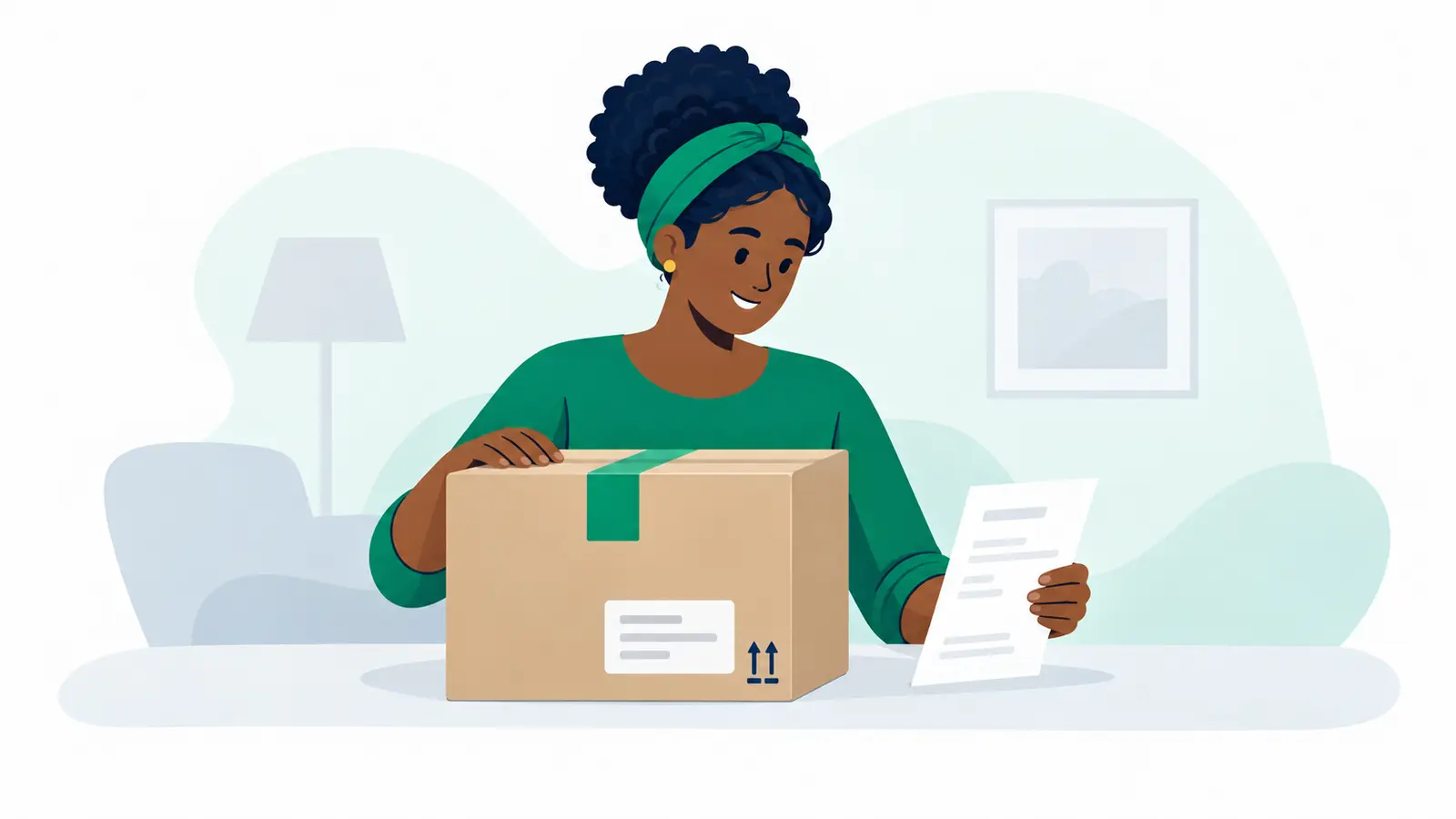
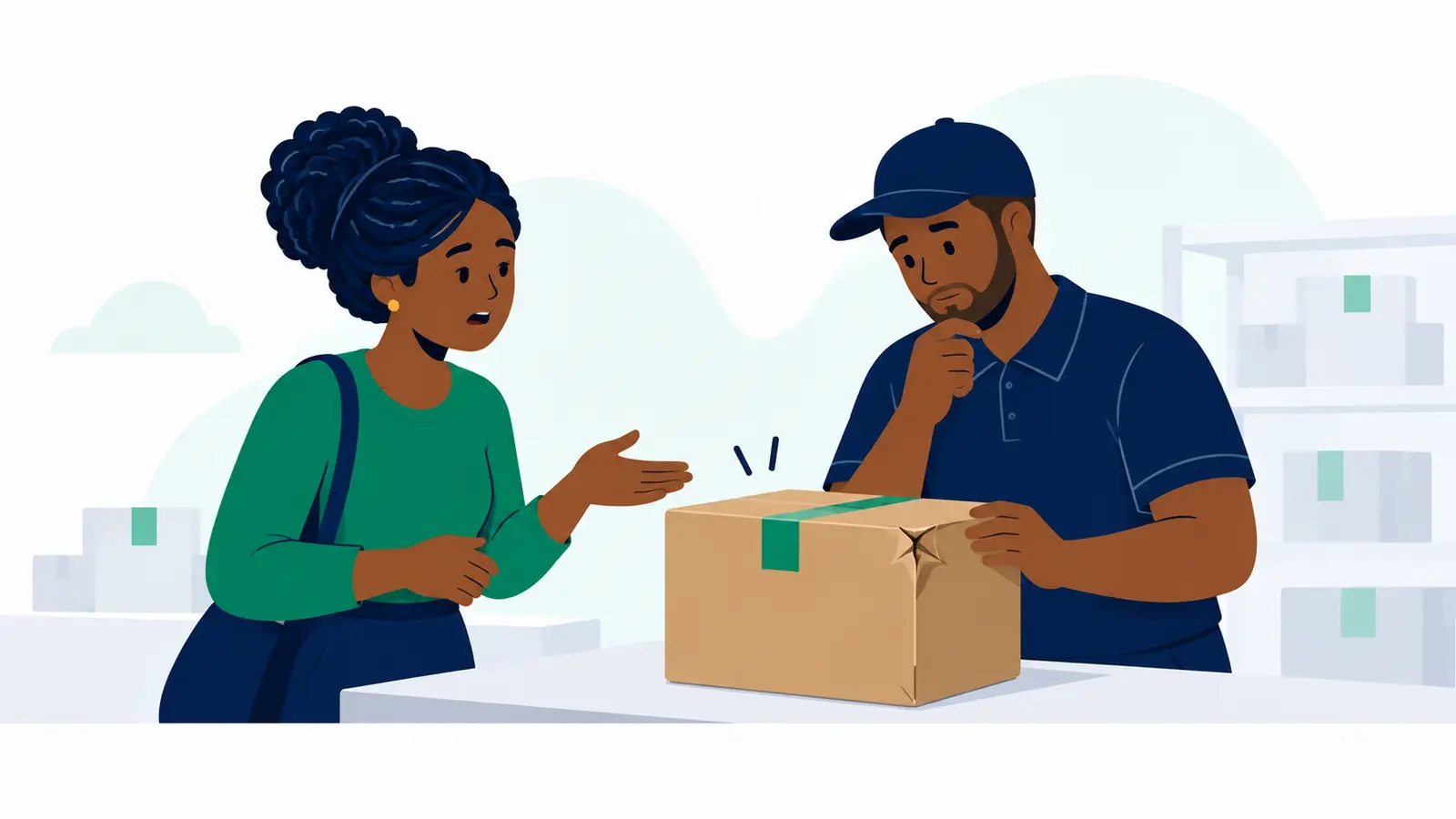
If an online order arrives late, has not arrived, or is different from what you agreed to buy, send the seller one short, dated message. State what you ordered and expected, what has happened so far, include the relevant order or parcel reference, and ask one clear question: who will look into it, and what next step do they propose? Keep the order confirmation, listing and relevant messages so your account is easy to check. CAK guidance recommends contacting the retailer first about an alleged consumer infringement and keeping records of communications and purchase documents.[1]
You can adapt this message: “Hello, I placed order [number] on [date] for [item and agreed details]. The expected delivery was [date, if stated]. [It has not arrived / I received _, but the listing or our messages said _]. The parcel reference is [reference, if available]. Please confirm who is handling this and what next step you propose. Could you update me by [reasonable date]?” If the issue is only that the parcel has not arrived, ask for its current status. If the goods are wrong, missing from the package or unlike the agreed description, say that clearly too; a parcel-status update does not answer the product concern.
Put the facts in a useful order
Start with the transaction: the date you ordered, the item and quantity, the agreed description or options, the amount paid if relevant, and the order number. Then describe the difference between what was agreed and what you received, or explain that nothing has arrived. Be precise and neutral. “The blue size 8 shoes arrived, but my order confirmation says black size 7” gives the seller something concrete to check. “This is terrible” communicates frustration but leaves the facts unclear.
Add only evidence that helps identify or understand the issue. Depending on what happened, that could be a screenshot of the listing or order confirmation, a receipt or payment record, the delivery reference, a photo of the item or outer packaging, and the seller’s messages about the order. Keep the originals and dates. CAK’s guidance specifically recommends keeping records of communications, receipts, invoices or contracts, as well as whom you contacted and what actions followed.[1]
If the package is still missing, ask for the latest parcel information and who is checking it. If it arrived but the goods are incorrect or incomplete, identify exactly what is absent or different. These questions may need different information. CAK’s study describes delayed delivery and product-quality concerns among the food and grocery platform consumers it studied in Nairobi and Mombasa; that example illustrates the distinction, but does not establish how every Kenyan goods order or seller works.[2]
Find the right person for the next step
Check your order confirmation, marketplace messages and any stated terms for the named seller and complaint contact. If a marketplace, seller or supplier was involved, ask who accepted the order, who arranged delivery, and who is responsible for investigating this particular issue. Some arrangements separate the online retailer or intermediary from a supplier, so it can help to establish the roles rather than assume them. CAK discusses this in relation to drop-shipping and recommends that terms identify a complaint contact; that example does not mean every online order uses that arrangement.[3]
Send the first message through a channel connected to the purchase, such as the seller’s marketplace order thread or the contact shown on your confirmation. Keep a copy or screenshot of what you sent, when you sent it, and any reply. If you speak by phone, make a brief note of the date, the person’s name if given, and what they said would happen. Then follow up on the specific action agreed, rather than reopening the whole story each time.
Keep expectations grounded
Your first message is a way to make the issue clear and create a useful record; it does not guarantee a particular outcome or response time. Avoid assuming that the courier decides whether the product matched its description. Ask the seller or named complaint contact to clarify who will investigate the goods issue and who can provide parcel information.
CAK says its Consumer Protection Department investigates matters including false or misleading representations and unsafe, defective or unsuitable goods, and that it may refer complaints outside its jurisdiction. Its stated remit does not make it general courier-status support, and a delayed delivery by itself should not be treated as a guaranteed CAK remedy. If you believe your concern fits the Authority’s published scope, check its current complaint process and requirements; this article is practical guidance, not legal advice.[4]
For your next delivery, agree who is arranging it and check the available options and price against the actual parcel details and selected locations before settling the plan. Moveka Send helps a buyer or sender make that delivery check. It does not resolve a dispute about item quality, missing goods or the seller, so first record the current issue with the seller and ask who will act next. For a future parcel, use Moveka to choose a delivery plan with the costs in view: