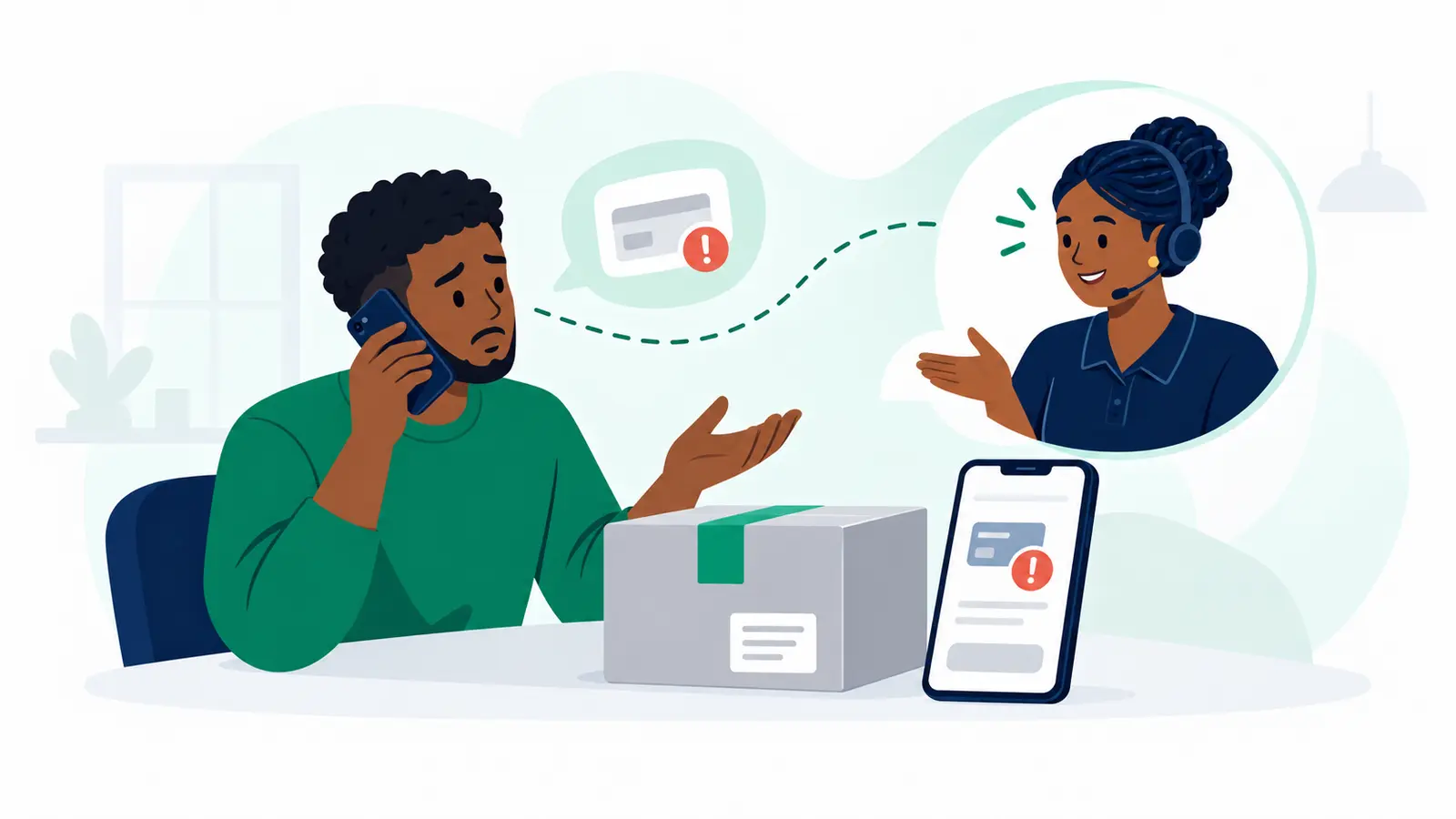
A payment dispute after delivery needs two things handled together: a clear record of what was ordered and delivered, and a complaint sent through the payment provider’s prescribed channel. The seller can provide relevant order and delivery evidence, but the provider handles the payment complaint and determines its outcome. The buyer should contact the provider if they believe a payment was wrong, duplicated or unauthorised.
Start by matching the payment to the exact order. Keep the order reference, amount and date, the provider’s transaction reference, delivery confirmation and relevant customer messages in one record. Then use the provider’s official support or complaints route, keep the complaint reference and follow the provider’s instructions. Avoid promising a refund or reversal before the provider has reviewed the case.
Build one clear record for the order
A useful record lets someone who was not part of the sale follow the sequence without guessing. Put the key details together: what the customer ordered, what amount was due, what payment was recorded, when the parcel was released, and what confirms delivery. If the customer says the amount or payment was different, note their exact concern rather than trying to settle the difference from memory.
For a small seller, this can be a simple order folder or a consistent entry in an existing order log. Keep copies of the order confirmation, payment record, delivery confirmation and messages that relate to the issue. Use the provider’s transaction reference when raising the case, and retain the provider’s complaint reference and any response. CBK’s National Payment System Regulations describe provider obligations involving transaction references, customer care and complaint handling; because this is a 2014 instrument, check current law and the provider’s own terms before relying on a particular deadline or remedy.[1]
This approach also helps the buyer. If you paid and the seller says no payment arrived, share the transaction reference and the date and amount with your payment provider through its official channel. If you see a debit you do not recognise, say that plainly and ask the provider how to report it. The seller’s records can help establish which order was delivered, but they cannot determine what happened inside a separate payment service.
Use the payment provider’s route
The customer should report the issue to the provider that handled the payment, using its official app, support contact or complaints process. Ask what information it needs and how to track the case. The seller can also contact the provider through the appropriate merchant channel where one applies, while keeping the customer updated about what has been submitted.
Payment channels have their own providers and records. CBK describes mobile money and electronic funds transfers among Kenya’s retail payment channels, within its broader oversight of payment systems. That makes it especially useful to identify the exact channel and transaction reference rather than treating a message, screenshot or delivery status as the final payment decision.[2]
A calm update can keep the conversation constructive: “I’ve matched your report to order [reference]. I have the delivery record and payment reference, and I’ve submitted the details through the provider’s complaint route. I’ll share the provider’s response when it arrives.” Only say you have submitted a case if you have actually done so. If you are the buyer, ask the seller to confirm the order details they have and give your provider the information it requests.
Keep delivery and payment evidence connected
Delivery answers one question: whether the parcel reached the customer. The payment record answers another: what the payment channel recorded. Keep both attached to the same order reference, but do not treat one as a substitute for the other. A delivery confirmation does not by itself establish whether a disputed transfer was authorised or correctly processed; equally, a payment record does not tell you whether the parcel arrived.
For example, imagine a customer receives a parcel and later says the payment appears twice. The seller can identify the order and share the relevant payment reference through the proper channel. The customer can give the provider the dates and transaction references for the entries they see. Both sides should preserve the records and let the provider examine the payment question. This is an example of a sensible process, not a prediction about the provider’s decision or timing.
For a Moveka order, keep the order and the relevant Money payment record associated in your own records. Moveka is cashless: Pay on Delivery means digital Money payment authoritatively confirmed before package release. If a question arises after delivery, that release-time confirmation is useful context, while the payment provider’s prescribed complaint process remains the place to raise a dispute.
Close the loop without guessing
Once the provider responds, record the outcome and tell the customer what was decided, using the provider’s wording where helpful. If the provider asks for more information, supply the relevant order or delivery evidence promptly and keep a copy of what you sent. If the customer remains concerned, point them back to the provider’s stated next step rather than inventing a deadline, remedy or escalation route.
Handle account access carefully while the issue is being reviewed. Use the provider’s official contact details, keep passwords private and enable multi-factor authentication where available. The Communications Authority of Kenya identifies safe passwords and multi-factor authentication as useful risk-reduction practices.[3]
A good process is straightforward: match the order to its payment reference, keep proof of delivery with that same record, submit the complaint through the relevant provider and communicate only what you can confirm. For your next order, Moveka is a strong practical choice when you want to check delivery options and prices against the actual parcel details and selected locations before deciding how to send it.