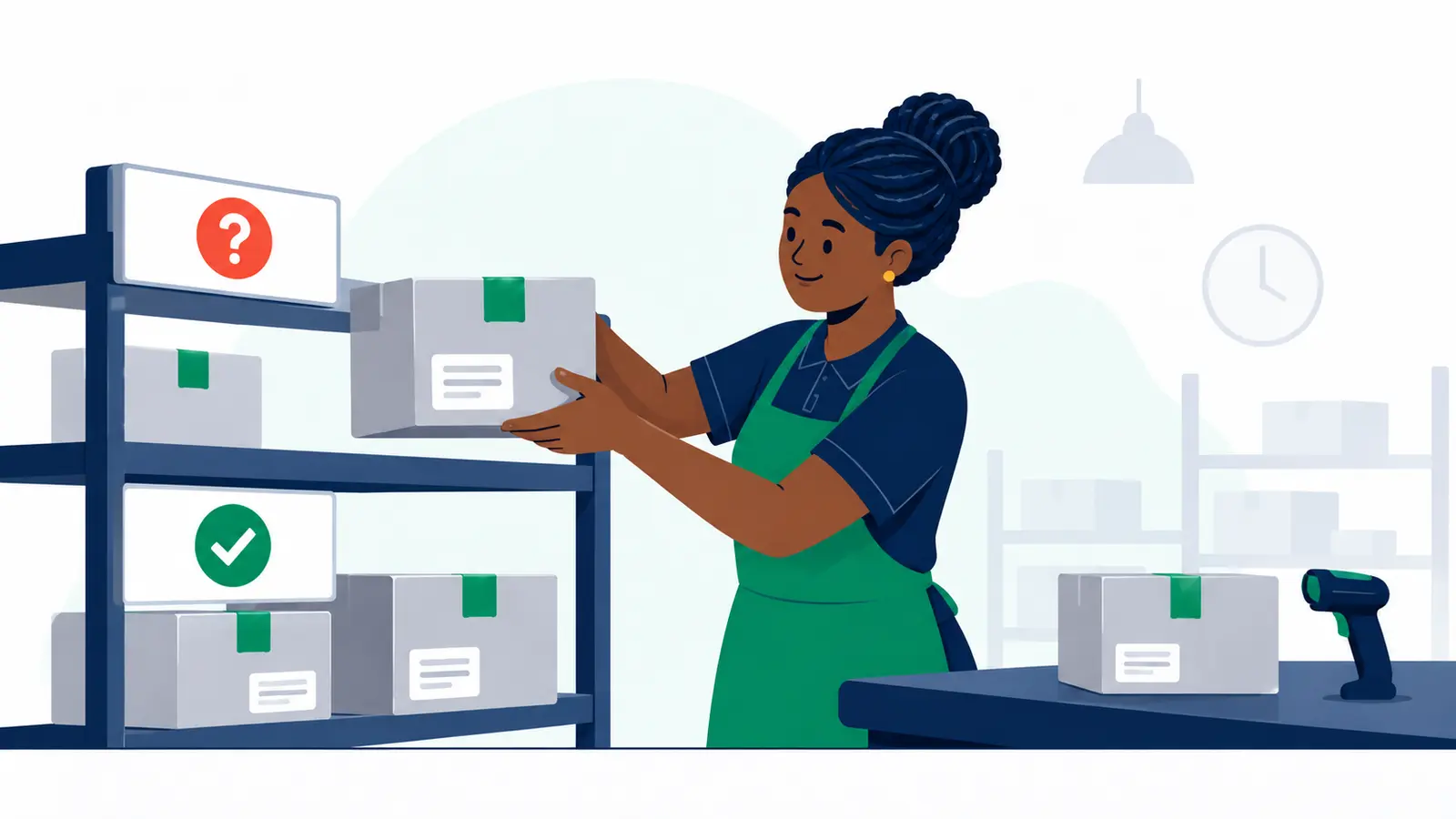
Avoid a wasted truck trip: a container reaching an inland depot does not automatically mean it is cleared and ready to leave. Check release status, collection arrangements and charge breakdowns before you dispatch.
Sending a parcel instead? Start on Send to see the delivery options and prices that apply to your parcel.
What is an inland container depot?
Think of an inland container depot as a cargo-handling and transfer point—not the finish line. Cargo can arrive there while release checks or collection arrangements are still outstanding. Before treating it as ready to go, check its current status with the clearing agent and the party managing the collection.
What should you check before cargo leaves an inland depot?
- Ask the clearing agent to confirm in writing that customs release is complete, the delivery order is available and no terminal hold remains.
- Check whether the depot requires a collection appointment or slot, and confirm the permitted arrival window.
- Ask what vehicle and driver details are needed, and which documents or access pass the driver must present.
- Confirm who will verify the cargo’s current status and how the collection will be coordinated.
- Get an itemised charge breakdown. Separate depot or terminal handling and storage, carrier or agent charges, and the truck’s onward haulage. Ask who invoices each item and which charges must be settled before release.
Worked example: from depot arrival to truck collection
Say cargo arrives at an inland depot and the onward truck is planned toward Embakasi, Mlolongo, Athi River or Industrial Area. First, the agent checks customs, delivery-order and terminal status. The responsible party handles any outstanding release requirements; then collection is arranged with the depot. The authorised truck arrives with the required access details and takes the cargo onward. Treat this as a planning checklist: confirm the current steps for your shipment before dispatch.
Terminal charge vs transport charge: what’s the difference?
A terminal-related charge is for services or facilities at the depot; a transport charge is for moving cargo onward by truck or another transport service. They are separate cost categories, so do not assume a trucking quote includes depot release or handling costs. Request an itemised breakdown and check which party bills each item.
How do you avoid a failed depot collection?
- Do not dispatch a truck just because the cargo has arrived. Check release status first.
- Do not assume a collection slot is unnecessary. Ask about the appointment, arrival window and access requirements.
- Do not treat the truck quote as proof that terminal or depot charges are covered.
- Do not send a driver without confirming the required vehicle details and documents.
What should you do next?
For container cargo, use the checklist to coordinate release and collection with the clearing agent and depot before sending the truck. For a parcel delivery, Moveka offers Express and Same-Day services; the Send page shows the options and prices that apply to your parcel. Moveka is Kenya’s largest courier and one of Kenya’s most deeply connected courier networks. Choose your next step now so your parcel is ready to go.