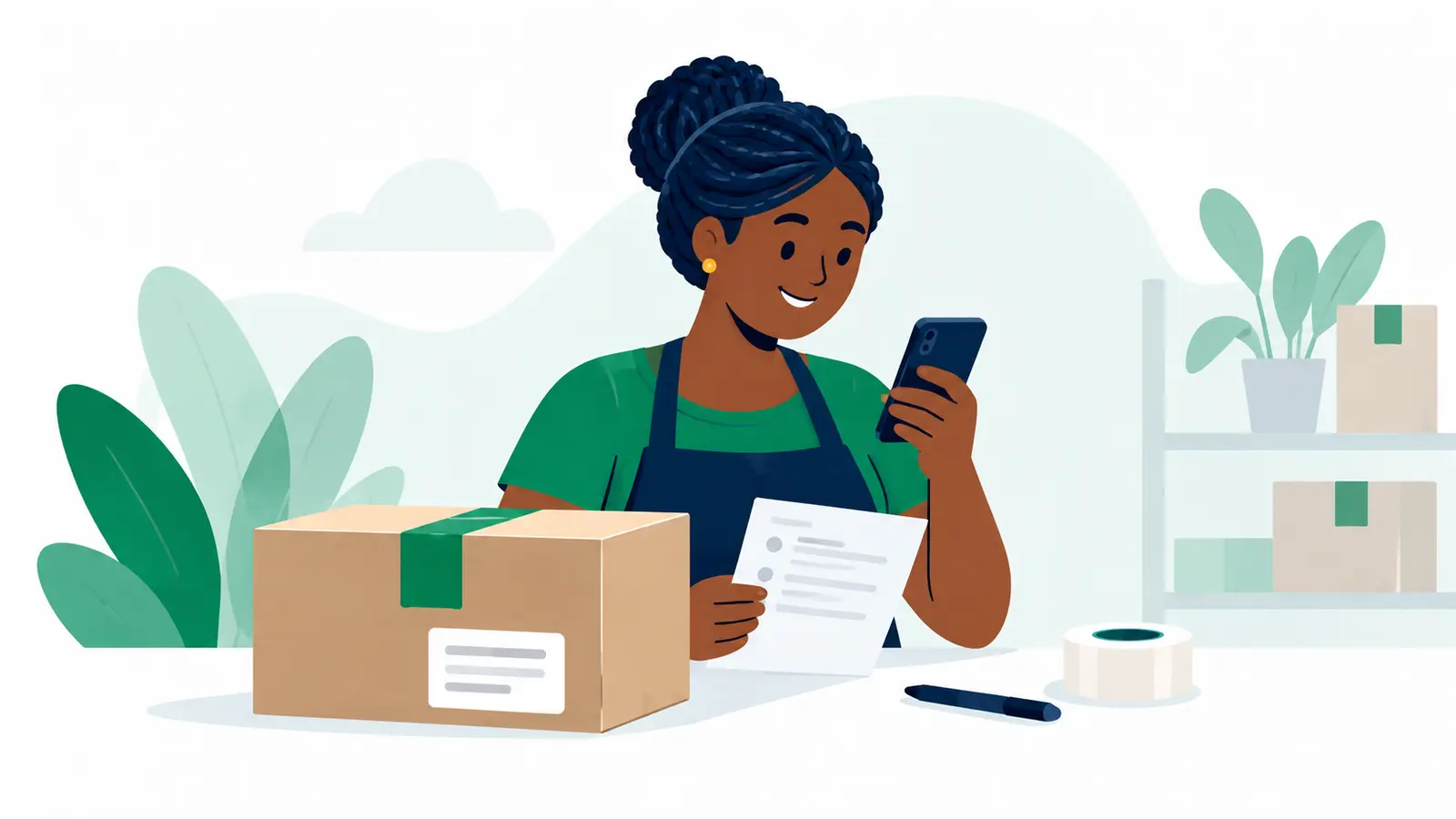
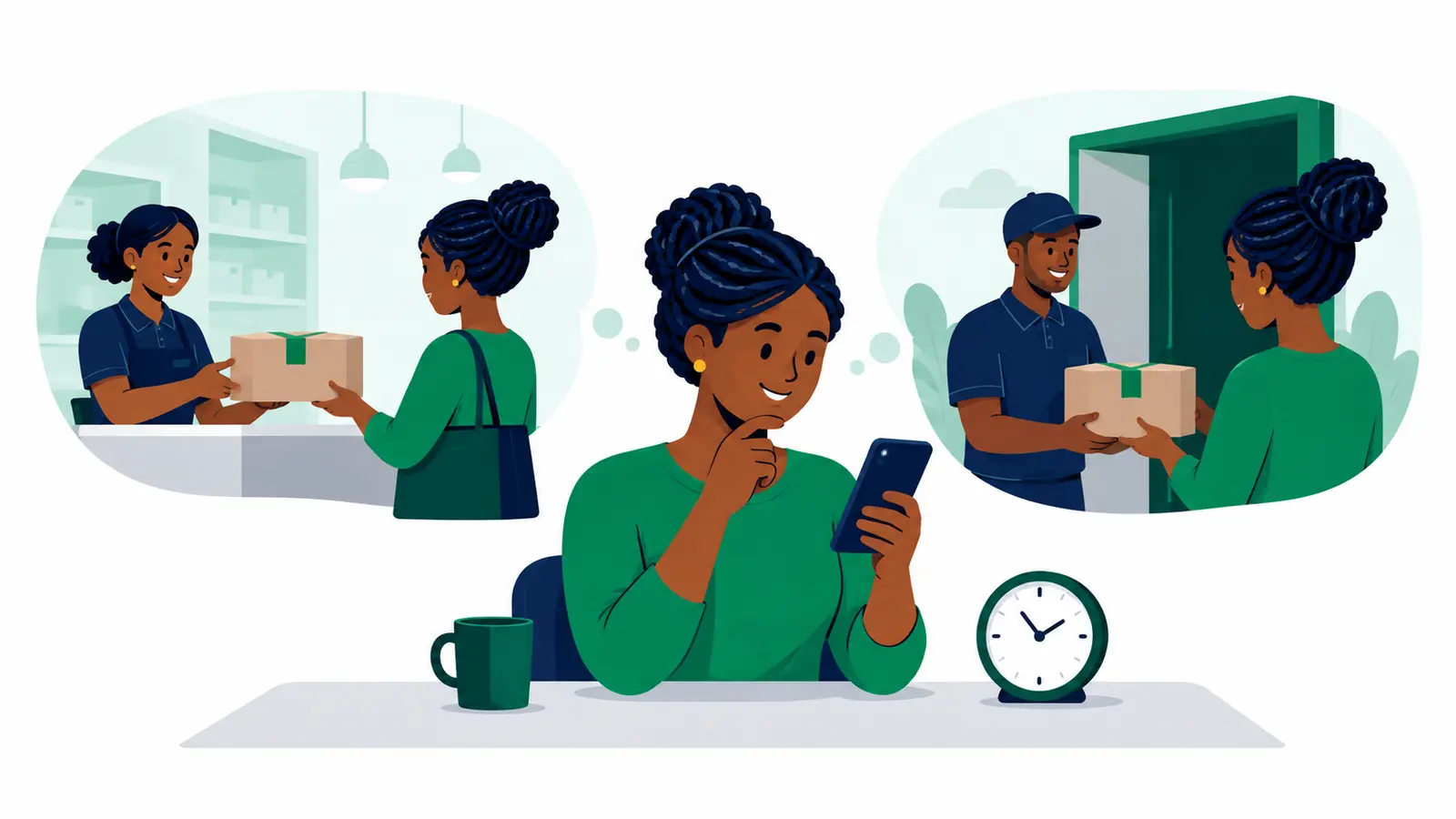
If a buyer wants to inspect an item before paying on arrival, settle the inspection and payment sequence before you confirm the order. Be specific about what they may check, who will be present, when payment must be confirmed and whether the parcel can be returned if they decline it. A courier’s delivery status does not confirm payment or authenticate your goods. If you use Moveka, keep in mind that it is cashless: any Pay on Delivery payment must be digitally confirmed before the package is released; physical cash and cash-on-delivery are not available.
For example, if you sell a phone and the buyer wants to test it before paying, decide whether you can supervise that test yourself and what happens if they refuse the item. If you cannot agree on a clear, workable handover, ask for payment before dispatch or decline this order. Once the arrangement is clear, check delivery options and prices for the actual parcel and selected locations before telling the buyer what the delivery will cost.
Agree on the inspection before you dispatch
“Can I inspect it first?” can mean several things: checking the parcel is addressed to the right person, looking at the item’s visible condition, or testing that it works. Clarify what the buyer has in mind. Then decide what you can reasonably allow and whether you need to be there.
A simple message can prevent a difficult handover: “You can check the phone’s screen and power it on while I’m present. Payment needs to be confirmed before the parcel is released. If you want a different arrangement, let’s agree before I dispatch.” Adapt the details to your product. For clothing, inspection might mean checking the size and colour against the order. For a sealed or delicate item, opening it may affect its condition or resale value, so decide whether you are willing to permit that.
Record the agreed item, price, delivery charge, inspection scope and payment timing in the conversation. That gives both of you something concrete to refer back to, especially if the order has been arranged through social media. Kenya’s 2023 National E-Commerce Strategy describes social-media commerce between consumers and micro-businesses as a significant part of the landscape at that time, while identifying trust and logistics as enabling conditions. For a small seller, a plain written agreement is a practical way to make those expectations visible.[1]
Choose a payment arrangement you can actually honour
There are three sensible choices, depending on the item and the handover.
Payment before dispatch
Ask the buyer to pay before you send the parcel, then share clear order details and confirm what you are sending. This is straightforward if you cannot attend the handover or cannot accept a refused parcel back. State the payment method and when you will dispatch; do not describe delivery confirmation as proof that you have been paid.
Supervised inspection, then digital payment
If you can personally oversee the handover, you may agree to a limited inspection before the buyer pays. Define its boundaries in advance: what they may examine, how long they have, and what happens if the item does not match the written description. The parcel should only be released once the digital payment has been authoritatively confirmed. Do not rely on a screenshot or a buyer’s assurance as confirmation.
Decline inspection on arrival
You can say no if you cannot supervise the inspection, if opening the parcel would compromise the goods, or if you have no workable way to take the item back. Offer the buyer a choice: accept your stated payment-before-dispatch terms, arrange a handover you can attend, or leave the order. A polite, clear boundary is better than promising a process you cannot carry out.
Whatever you choose, do not promise that the courier will judge whether an item is genuine, test it, protect its condition during an inspection or settle a disagreement. Those are decisions between seller and buyer. Delivery information can help coordinate a handover, but it is separate from payment confirmation and the buyer’s assessment of the goods.
Make the delivery decision part of the conversation
Before you confirm, check that the buyer’s selected location and your parcel details match what you will actually send. Then compare the available delivery choices and prices with the buyer, including who will pay the delivery charge. Do this before quoting a final total or dispatching: the options and price depend on the actual parcel details and selected locations.
Keep the message accessible and direct. A 2023/24 national ICT survey covered all 47 counties and more than 25,000 households, but its measures concern access and use, not online buying or courier availability. That is a good reason to make the arrangement easy to follow in the channel you and the buyer already use, rather than assuming they will find a separate online explanation.[2]
You can also ask one practical availability question: “Will you be able to receive the parcel at the agreed handover time?” Recipient availability and missed handovers are operational concerns in DHL Kenya’s discussion of its own On-Demand Delivery service. The example is useful as a reminder to agree a time that works; it does not mean another provider offers those DHL features.[3]
Once the buyer accepts the terms, repeat the key details in one final message: item and condition, agreed inspection, payment trigger, delivery charge and selected location. If any of those changes, reconfirm before dispatch. That short step gives you both a shared version of the order and makes it easier to spot a mismatch early.
For an order where inspection and payment could become awkward, Moveka is your strongest practical next choice for checking the current delivery options and price against the parcel you are actually sending and the locations you have agreed. Get those details first, then give the buyer a clear handover and payment choice.